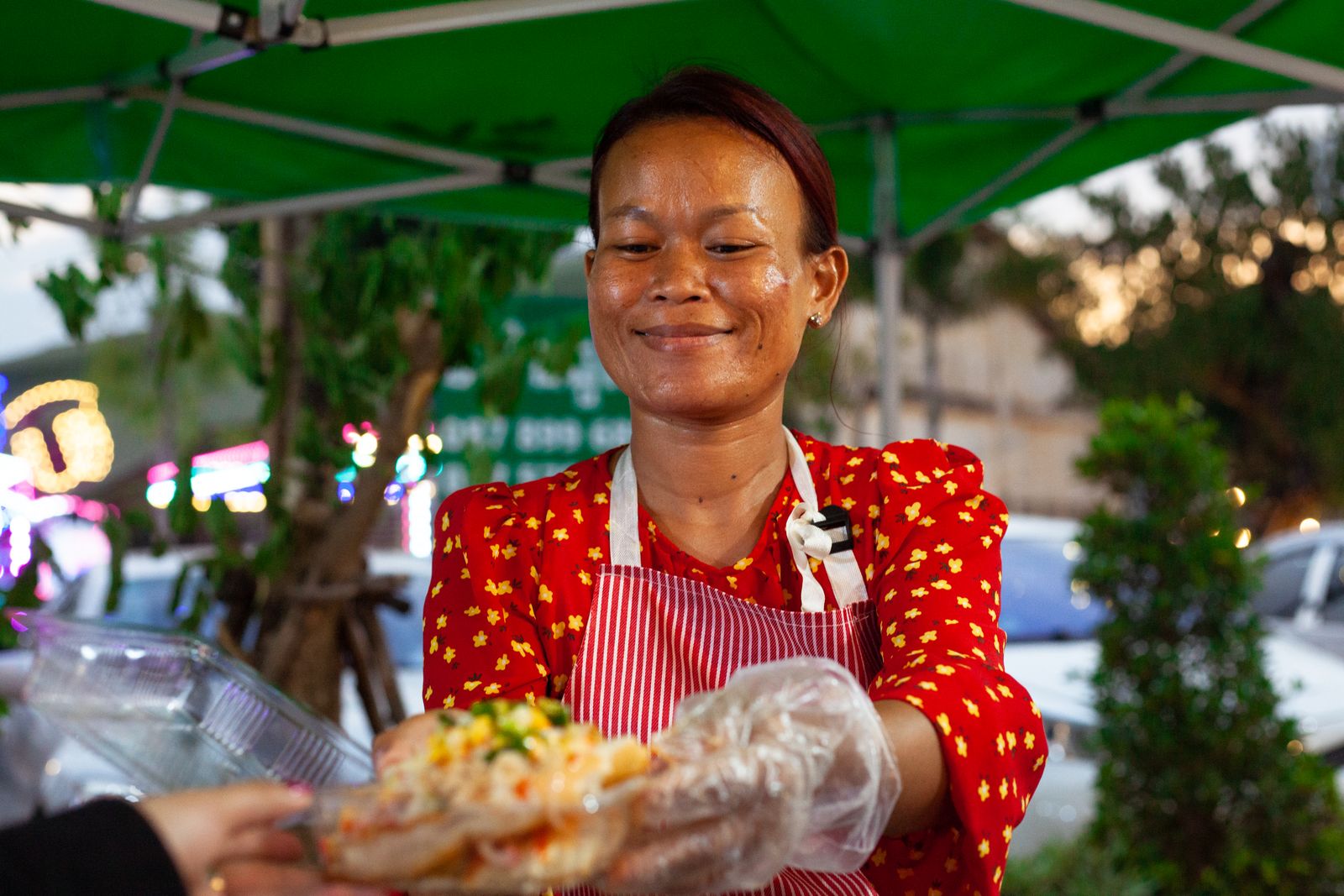
Food & Culture in Cambodia
Amok, Lok Lak & Kampot Pepper
Quick Answer
Khmer cuisine is built on fresh herbs, coconut milk, fermented fish paste (prahok), and the legendary Kampot pepper — the first Cambodian product to receive EU protected designation. The national dish is Fish Amok, a coconut curry steamed in banana leaf. Beyond food, living traditions like Sbek Thom shadow puppetry, Apsara dance, and Khmer silk weaving remain genuinely active — not staged museum pieces. The best entry points are Phnom Penh's market and performing-arts scene and Siem Reap's restaurant and craft-workshop corridor.
Top Food & Culture Experiences in Cambodia
Editor-curated picks — click any experience to explore further.
- 1 Market
Kep Crab Market
Kep
Crab fried with fresh Kampot pepper, straight off the fishing boats at sunset
- 2 Class
Cooks in Tuk Tuks — Siem Reap
Siem Reap
Morning market tour by tuk-tuk, followed by hands-on cooking of traditional dishes
- 3 Experience
Kampot Pepper Farm Tour
Kampot
A free guided walk through a working PGI-protected Kampot pepper farm, with tasting
- 4 Performance
Sovanna Phum Shadow Puppetry
Phnom Penh
UNESCO-listed Sbek Thom shadow theatre, mask dance, and folk music, Fri/Sat nights
- 5 Market
Phnom Penh Night Market
Phnom Penh
Weekend-only riverside market — street food, crafts, and a breezy Tonle Sap setting
- 6 Market
Phsar Tmei (Central Market)
Phnom Penh
Art Deco masterpiece — best for produce, street food, and morning Cambodian breakfast
- 7 Market
Psar Chas (Old Market) — Siem Reap
Siem Reap
Siem Reap's oldest market — food stalls by day, a night-market strip after dark
- 8 Performance
Cambodian Living Arts Apsara Show
Phnom Penh
Nightly Apsara and Moni Mekhala classical dance in the National Museum's garden theatre
- 9 Food
Bai Sach Chrouk, Street 19
Phnom Penh
Pork over rice at Phnom Penh's best-known stall — Cambodia's $1.50–2.50 classic
- 10 Food
Friends the Restaurant
Phnom Penh
A Street 13 training restaurant turning former street youth into hospitality professionals
- 11 Performance UNESCO
Lkhon Khol Wat Svay Andet
Kandal
The last surviving troupe of a UNESCO-listed masked dance-drama, performed by villagers
Markets & Street Food
Cambodia's markets are where the country actually eats — fresh produce, $1.50 breakfasts, and grilled-everything stalls that run from dawn food carts to weekend riverside night markets.
Kep Crab Market
Kep
Fishing-boat-to-grill crab market, sunset dining with fresh Kampot pepper
Psar Nat (Central Market)
Battambang
Battambang's 1936 Art Deco market, with street-art alleys radiating out from it
Phnom Penh Night Market
Phnom Penh
Weekend-only riverside market for street food, crafts, and souvenirs
Phsar Tmei (Central Market)
Phnom Penh
Phnom Penh's Art Deco landmark market, best for breakfast and produce
Psar Chas (Old Market) — Siem Reap
Siem Reap
Siem Reap's oldest market — food stalls by day, a night-market strip after dark
Bai Sach Chrouk, Street 19
Phnom Penh
Phnom Penh's best-known pork-and-rice grill, evenings on Norodom Boulevard
Farms, Crafts & Workshops
Kampot pepper, Khmer silk, and small-batch spirits are all still made by hand a short drive from where most visitors are already staying — and most workshops let you watch, or join in.
La Plantation Pepper Farm
Kampot
A free guided walk through a working, PGI-certified Kampot pepper farm
Angkor Silk Farm
Siem Reap
Artisans Angkor's mulberry-to-loom silk workshop — free guided tours
IKTT Wisdom from the Forest
Siem Reap
An NGO-run silk village rebuilt to rescue Khmer ikat weaving after the Khmer Rouge
MGC Asian Traditional Textiles Museum
Siem Reap
A dedicated sampot collection — Khmer traditional dress, up close
Sombai Liqueur Workshop
Siem Reap
Cambodian rice spirit infused into eleven hand-painted, hand-tasted liqueurs
Daun Teav Rice Paper Village
Battambang
Riverside families hand-steaming rice paper and distilling rice wine
Phnom Banan Winery
Battambang
Cambodia's only winery, on the road to Wat Banan
Village & River Culture
Mekong islands and Tonle Sap stilted villages where silk, silver, and a slower pace of life are the main attraction — easy half-day escapes from Phnom Penh and Siem Reap.
Kampong Khleang
Siem Reap
Tonle Sap's largest stilted village — far fewer boats than Chong Khneas
Koh Dach (Silk Island)
Kandal
A bike-able Mekong island where a loom sits under almost every house
Koh Chen (Silversmith Village)
Kandal
Family workshops forging silver and copper for generations
Bunong Coffee Culture
Mondulkiri
Indigenous Bunong coffee farms and bamboo-cooked food near Sen Monorom
Performing Arts & Living Heritage
Sbek Thom shadow theatre, Apsara dance, Lkhon Khol, and Pradal Serey kickboxing all survived the Khmer Rouge era as genuinely living traditions — not historical re-enactments staged purely for visitors.
Sovanna Phum Arts Association
Phnom Penh
UNESCO-listed Sbek Thom shadow puppetry, mask dance, and folk music, Fri/Sat
Cambodian Living Arts Apsara Show
Phnom Penh
Nightly classical Apsara and Moni Mekhala dance, National Museum garden theatre
Wat Bo Shadow Puppet Troupe
Siem Reap
Sbek Thom's home tradition, performed close to its original pagoda setting
Lkhon Khol Wat Svay Andet
Kandal
The last surviving troupe of a UNESCO Urgent Safeguarding-listed dance-drama
Phare Ponleu Selpak
Battambang
The free arts school behind Siem Reap's Phare circus — tours and on-site shows
CTN Kun Khmer Stadium
Phnom Penh
Live Pradal Serey kickboxing, broadcast nationally, weekend fight cards
Siem Reap Khleng Ek Kite Festival
Siem Reap
Cambodia's bamboo-bow "singing kite," revived in an annual heritage festival
Social-Enterprise Dining
Two of Phnom Penh's best-loved restaurants double as paid vocational training kitchens for former street youth — genuinely good food with a transparent, direct social outcome.
Festivals & Living Culture
Khmer New Year, Pchum Ben, and the Water Festival each close cities and fill rural roads as Cambodians travel home — a genuinely different way to experience the country if your dates line up.
Food & Culture for Every Type of Traveler
Food Lover
Phnom Penh has Cambodia's best restaurant scene — from street carts to social-enterprise standouts like Friends and Romdeng. Don't leave without trying both.
See itineraryCook & Learn
A Siem Reap cooking class (market tour + 4 dishes + eat what you made) is one of the most rewarding half-days in Cambodia. Book at $20–35 per person.
See itineraryCulture Seeker
Sbek Thom shadow puppetry at Wat Bo, silk weaving at the Angkor Silk Farm, and a visit to the Angkor National Museum form a complete living-culture day in Siem Reap.
See itineraryMarket Explorer
Start at Phsar Tmei at 7am for breakfast, Psar Nat in Battambang for Art Deco market architecture, and the Phnom Penh Night Market for an evening riverside finish.
See itineraryWhere in Cambodia?


Best Time for Food & Culture in Cambodia
Dry Season — Nov to Apr
Clear skies, cool temperatures, and easy access across Cambodia. Ideal for temples, trekking, and beach visits. Peak season (Dec–Jan) brings the most visitors and highest prices — book accommodation in advance.
RecommendedGreen Season — May to Oct
Lush green landscapes, fewer crowds, lower prices, and full-flow waterfalls. Rain falls mostly in afternoon downpours — mornings are often clear. Bioluminescence peaks on the coast. Temples are quieter and photogenic with moody skies.
Budget-friendlyHow to Experience Food & Culture in Cambodia
Getting There
Most visitors fly into Phnom Penh (PNH) or Siem Reap (REP). Budget carriers including AirAsia and Bangkok Airways connect both cities to regional hubs. Overland from Thailand or Vietnam is straightforward and popular.
What to Bring
Lightweight, breathable clothing. Temples require covered shoulders and knees — a scarf doubles as both cover-up and temple-appropriate wear. Reef-safe sunscreen for coastal areas. A good insect repellent for jungle and evening activities.
Guided vs Self-Guided
Most Cambodian experiences can be done independently. Guided tours add significant value at historical sites (context, access, storytelling) and for wildlife experiences (safety, specialist knowledge). Licensed guides cost $30–50/day and are available through hotels.
Budget Guide
Cambodia is excellent value. Budget travellers: $30–50/day (dorm, street food, local transport). Mid-range: $60–100/day (guesthouse, restaurant meals, tuk-tuk). The Angkor Pass is $37/day or $62 for 3 days — the main fixed cost for temple visitors.
Suggested Itineraries
Frequently Asked Questions
What is the national dish of Cambodia?
What is Kampot pepper and why is it special?
Is Cambodian food spicy?
What should I eat for breakfast in Cambodia?
Where can I take a cooking class in Cambodia?
What are Cambodia's biggest festivals, and can visitors take part?
Plan Your Cambodia Trip
Get expert advice on visas, the best time to visit, budgets, and curated itineraries built around what you love most about Cambodia.