
Long before it was a dinner-show staple in Siem Reap, Apsara dance was a sacred court ritual — performed exclusively for the king, believed to be a literal communication channel between the Khmer Empire’s rulers and the divine. Understanding that history changes how the modern performances land.
Origins in the Khmer Royal Court
The dance form takes its name and inspiration from the apsaras — celestial nymphs of Hindu and Buddhist mythology — carved by the thousands into the walls of Angkor Wat and other Angkorian temples. Historical court dance (Khmer classical dance, Robam Preah Reach Trop) developed over centuries as a royal art form, performed by dancers trained from childhood and attached directly to the palace, believed to embody these celestial beings and to please the gods on the king’s behalf.
The art form was nearly destroyed entirely: the Khmer Rouge regime targeted performers, musicians and royal dancers specifically, and an estimated 90% of Cambodia’s classical dancers and master teachers were killed between 1975 and 1979. What survives today exists because a small number of teachers and performers — many trained personally by Queen Mother Sisowath Kossamak — survived and rebuilt the tradition from the early 1980s onward, transmitting it from memory.
What the Movements Actually Mean
Classical Khmer dance has no improvisation — every gesture is codified and specific. Each hand position (there are dozens) carries precise symbolic meaning: a particular curl of the fingers might represent a flower, a leaf, or a particular emotional state. The deeply backward-bent fingers that define the form take years of physical training, often starting in early childhood, to achieve without strain. Facial expression is kept deliberately restrained and serene — the performance is about the form’s symbolic weight, not theatrical emotion.
The elaborate costumes — tightly wrapped gold brocade, ornate tiered headdresses (mokot) — are themselves part of the symbolism, modelled directly on the carved apsara reliefs at Angkor.
Where to See It Performed Authentically Today
Siem Reap is the easiest place to see a performance, but quality varies hugely. The most respected option is the Cambodian Living Arts dinner show at Angkor National Museum or their dedicated theatre — the organisation was founded specifically to rebuild traditional arts after the Khmer Rouge years and trains the next generation of performers, so ticket revenue funds the art form’s survival rather than just a tourist dinner show. Phare Ponleu Selpak in Battambang, while better known for contemporary circus, also runs traditional dance training and occasional performances. In Phnom Penh, the Royal University of Fine Arts occasionally opens rehearsals or student performances to the public — check locally, as schedules aren’t well advertised online.
Avoid the very cheapest buffet-dinner shows that treat the dance purely as background entertainment; a respectful venue will introduce the piece being performed and what it represents.
Apsara in Stone vs. Apsara on Stage
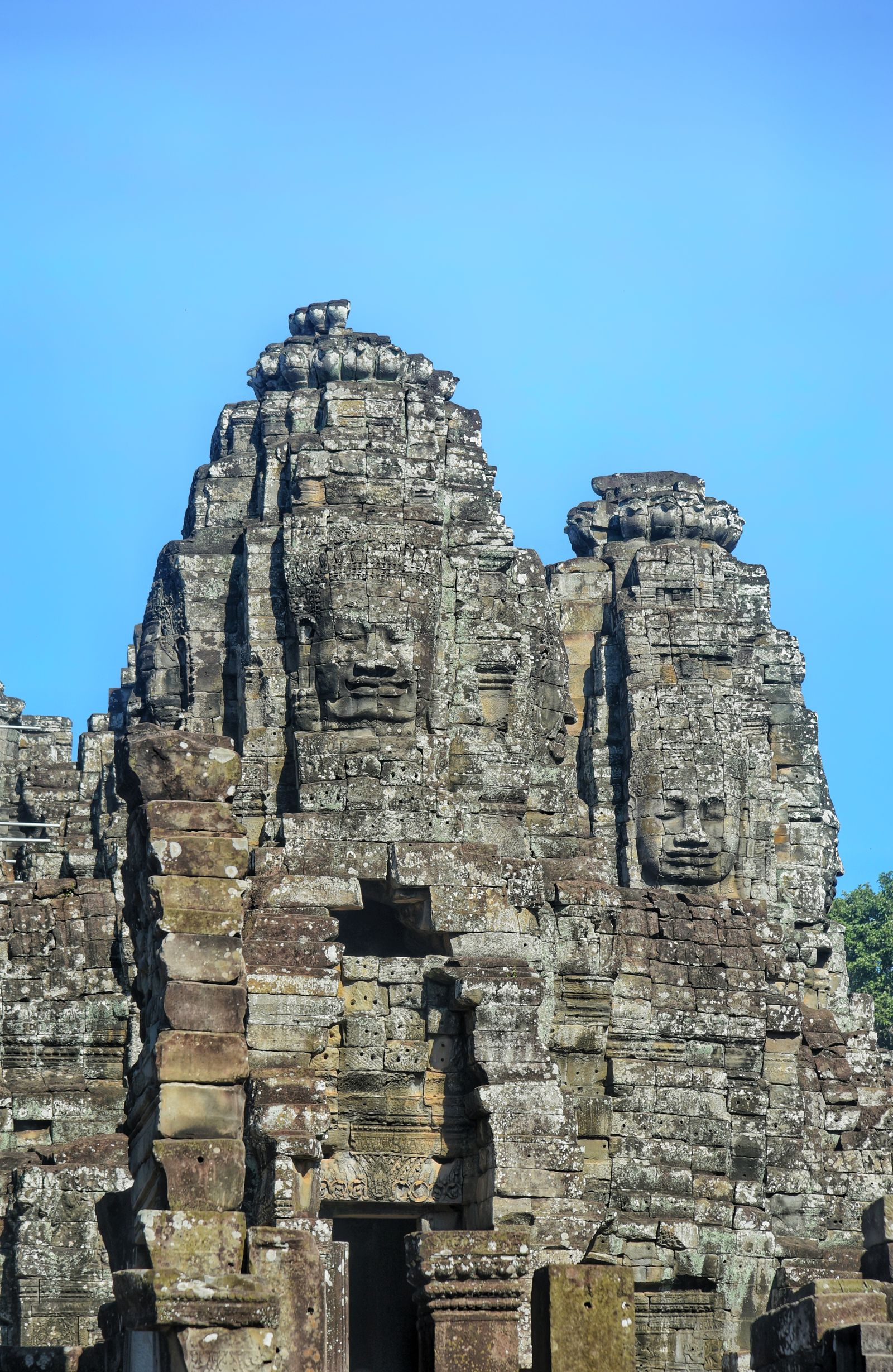
Angkor Wat alone contains over 1,860 individually carved apsara figures, no two with quite the same hairstyle or jewellery — historians believe some were modelled on real court dancers of the period. Visiting Angkor with this in mind changes the experience: the carvings on the temple walls and the performance on a Siem Reap stage are, in a real sense, the same artistic lineage, separated by nearly a thousand years. If you watch a performance before visiting the temples (or vice versa), each makes the other noticeably more legible.
Supporting the Art Form Responsibly
Classical dance in Cambodia survives today substantially because of a handful of arts organisations — Cambodian Living Arts foremost among them — that train new dancers, pay performers fairly, and treat the form as living heritage rather than a tourist backdrop. Choosing a show run by or affiliated with one of these organisations, rather than the cheapest available option, is a meaningful way to put tourism revenue directly behind cultural preservation.
Frequently Asked Questions
Is Apsara dance the same as the dancers carved at Angkor Wat? They’re directly related — the dance form takes its name, costume style and many of its gestures from the apsara figures carved into Angkorian temple walls, though the performed dance tradition developed separately over centuries.
Where is the best place to see Apsara dance in Cambodia? Siem Reap has the most regular performances; look specifically for shows run by or affiliated with Cambodian Living Arts for the most authentic, best-supported experience.
Did the Khmer Rouge really target dancers specifically? Yes — performers, musicians and classical artists were disproportionately killed, and an estimated 90% of pre-1975 classical dancers and teachers did not survive the regime.
Can foreigners learn Apsara dance? Some cultural centres and NGOs in Siem Reap and Phnom Penh offer short workshops for visitors, though serious training (as with any classical dance form) traditionally begins in early childhood.
Is it disrespectful to photograph an Apsara performance? Generally no, and most venues allow photography — but avoid flash, and treat the performance with the same quiet respect you would a religious ceremony, which is closer to its original cultural role than a stage show.
Related Articles

Sokunthea Keo
Cambodian food and culture expert based in Siem Reap.
Ready to Visit Cambodia?
Browse itineraries, destinations, and everything you need to plan your trip.