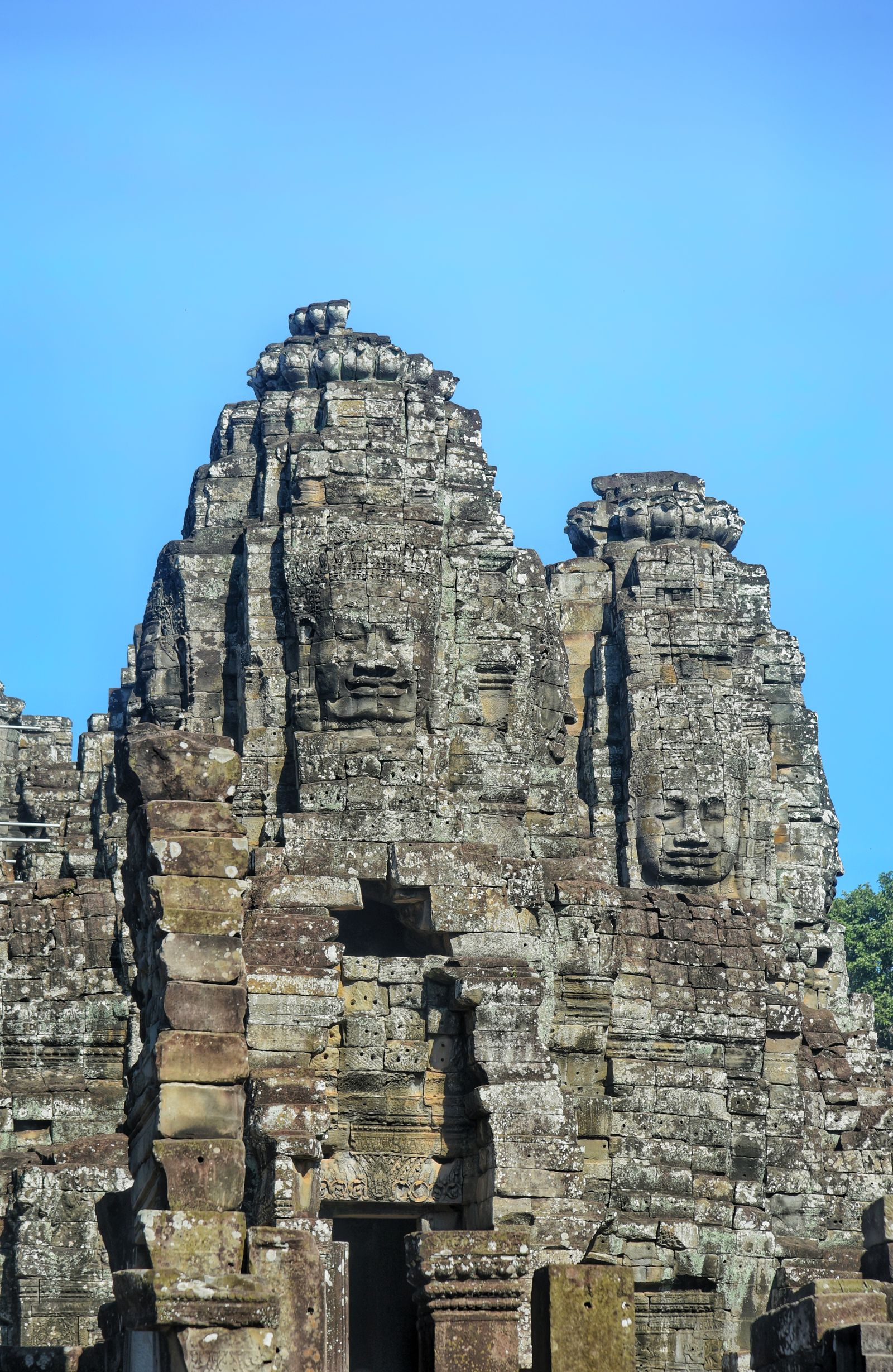
Most visitors arrive at Angkor knowing it’s old and impressive and leave without quite grasping the scale of what they actually saw. Some context changes that: at its 12th-century peak, Angkor was almost certainly the largest pre-industrial city on Earth, sprawling across an area comparable to modern Los Angeles, supporting a population some researchers estimate at up to a million people — at a time when London had perhaps 20,000.
How the Khmer Empire Began
The Khmer Empire traces its founding to around 802 CE, when Jayavarman II unified several competing Khmer principalities and declared himself a chakravartin — a universal monarch — in a ceremony on Phnom Kulen, the sandstone plateau northeast of modern Siem Reap that would later supply the stone for Angkor’s temples. Over the following six centuries, a succession of kings expanded Khmer territory across most of modern Cambodia, Laos, Thailand and southern Vietnam, while building an increasingly ambitious capital around the Angkor region.
Water Was the Empire’s Real Technology
Angkor’s true engineering achievement, more than the temples themselves, was hydraulic. The Khmer built a vast network of barays (reservoirs), canals and moats to manage the Tonle Sap floodplain’s extreme wet/dry seasonal swing, enabling rice harvests far beyond what rainfall alone could support — quite possibly three crops a year in places, which is what allowed a population this large to be fed at all. The West Baray, still visible today, covers roughly 8 square kilometres; it was one of several reservoirs that made Angkor’s farmland productive enough to support a true urban centre rather than a scattered agrarian population.
Suryavarman II and the Building of Angkor Wat
Angkor Wat, the temple most people picture when they think of Cambodia, was built under Suryavarman II in the early 12th century as a state temple dedicated to the Hindu god Vishnu — and, unusually, also intended as his eventual mausoleum, which is why the temple faces west rather than the customary east. Its scale alone (the largest religious monument in the world by land area) and its 800-metre bas-relief gallery depicting Hindu epics and Suryavarman’s own military campaigns represent the empire near its architectural and political peak.
Jayavarman VII and the Bayon’s Faces
Roughly seventy years later, after a damaging Cham invasion sacked Angkor in 1177, Jayavarman VII took the throne and responded with an extraordinary building campaign: the walled city of Angkor Thom, its centrepiece the Bayon temple, famous for the 200-plus giant serene stone faces carved into its towers, generally believed to merge the king’s own likeness with that of a bodhisattva. Jayavarman VII was also a committed Buddhist in a Hindu-dominated tradition, and shifted Angkor’s state religion to Mahayana Buddhism — a change later partially reversed by his successors, which is part of why several Angkor temples show signs of later religious “re-carving.”
Banteay Srei: The Empire’s Finest Detail Work
Smaller and far less visited on a rushed itinerary, Banteay Srei — built nearly two centuries before Angkor Wat, around 967 CE, under a royal tutor rather than a king — is widely considered the finest decorative stone carving the Khmer ever produced. Its pink sandstone allowed a depth and delicacy of relief that the grey sandstone used elsewhere at Angkor couldn’t achieve, and the temple’s small scale means almost every surface is intricately carved. It’s worth the extra 40-minute drive from the main Angkor complex specifically for this reason.
Why the Empire Declined
There’s no single agreed cause. The most credible modern theories combine several factors: a series of severe droughts and floods recorded in tree-ring data through the 14th–15th centuries that likely overwhelmed the hydraulic system the empire depended on; the rise of the Ayutthaya Kingdom to the west, which repeatedly sacked Angkor through the 15th century; and a gradual royal shift of the capital toward Phnom Penh and the Mekong, better positioned for the maritime trade that was coming to matter more than rice-farming hinterlands. By the 1431 Ayutthayan sack of Angkor, the city’s role as capital had effectively ended, though it was never fully abandoned — Buddhist monks maintained a presence at Angkor Wat continuously into the present day.
What This Means When You’re Actually There
Knowing this history changes the temple-hopping itinerary that most visitors do anyway: Angkor Wat (Suryavarman II’s peak-empire ambition), the Bayon and Angkor Thom (Jayavarman VII’s post-crisis rebuilding and personal religious shift), and Banteay Srei (an earlier, smaller, more intimate artistic high point) aren’t just three more temples on a list — they’re three different moments and motives in a six-century story, and seeing them with that in mind is the difference between an impressive day out and actually understanding what you’re looking at.
Frequently Asked Questions
How long did the Khmer Empire last? Roughly 600 years, from Jayavarman II’s founding around 802 CE to Angkor’s effective abandonment as capital after 1431, though Khmer kingdoms continued afterward from Phnom Penh and other capitals.
Why does Angkor Wat face west instead of east like most Khmer temples? It was built partly as Suryavarman II’s funerary temple; west, the direction of the setting sun, is traditionally associated with death in Khmer and broader Indic symbolism.
Who built the faces at the Bayon? Jayavarman VII, in the late 12th/early 13th century, as part of rebuilding Angkor Thom after a Cham invasion. The faces are generally interpreted as merging the king’s likeness with a bodhisattva.
Was Angkor really the largest city in the pre-industrial world? Several archaeological studies using LIDAR mapping support this — by built-up area, Angkor’s urban sprawl likely exceeded any other pre-industrial city, including its contemporaries in medieval Europe and the Middle East.
Why did the Khmer Empire decline? Most likely a combination of climate-driven stress on its water management system, repeated military pressure from the Ayutthaya Kingdom, and a gradual strategic shift toward the Mekong and maritime trade.
Related Articles


Sophea Rithy
Southeast Asia specialist. 7 years living in Phnom Penh.
Ready to Visit Cambodia?
Browse itineraries, destinations, and everything you need to plan your trip.