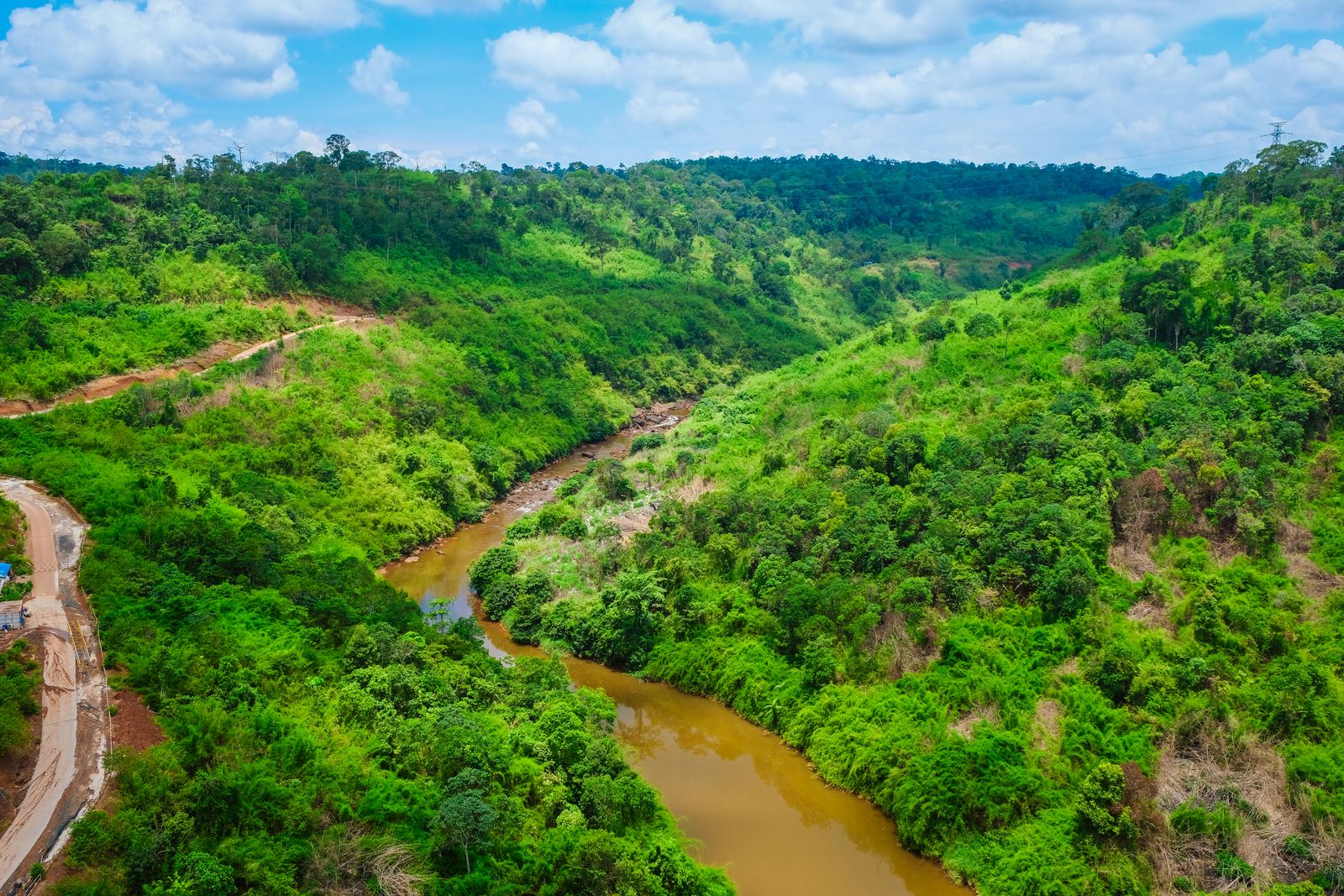
The Cardamom Mountains cover roughly a quarter of Cambodia’s land area, straddle Koh Kong, Pursat and Battambang provinces, and remain one of the largest intact rainforests left in mainland Southeast Asia — partly because decades of conflict and landmines kept logging and settlement out longer than almost anywhere else in the region. The result, now that large parts are protected as national park, is a wilderness most visitors to Cambodia never see.
Where the Cardamoms Are, and Why They Survived
The range runs along Cambodia’s southwest, roughly between Koh Kong town and the Thai border down to the Gulf of Thailand coast near Sihanoukville. Central Cardamom Mountains National Park and Southern Cardamom National Park, both managed with conservation NGOs including Wildlife Alliance, together protect well over a million hectares — rainforest, montane cloud forest on the higher peaks, and Cambodia’s largest remaining stretches of unbroken wilderness. Phnom Aural, the country’s highest peak at 1,740m, sits inside the range.
Chi Phat: Cambodia’s Original Ecotourism Village
The easiest way into the Cardamoms is Chi Phat, a village on the Preak Piphot River that was, until the mid-2000s, a centre of illegal logging and wildlife poaching. A community-based ecotourism (CBET) programme, set up with Wildlife Alliance, retrained former loggers and hunters as trekking guides and now runs the whole operation: guided day hikes and multi-day treks, mountain biking, kayaking, and overnight camping in the forest. More than 18,000 visitors have come through since 2007, with the large majority of revenue going directly to participating families — a genuinely rare example of ecotourism that visibly changed local incentives away from logging.
Chi Phat is reached by a 3-hour boat ride from Andoung Tuek on the coastal road, or increasingly by a rougher road route — check current conditions locally, as routes change with the season.
What Wildlife You Might Actually See
Set expectations correctly: the Cardamoms are a “lucky if you see it” wildlife destination, not a safari park. Camera-trap surveys have recorded Indochinese tigers’ last confirmed Cambodian populations here historically (now believed locally extinct, though surveys continue), along with Asian elephants, clouded leopards, sun bears, pileated gibbons, and an exceptional range of birdlife. Night treks with local guides — who know the calls and signs — are your best realistic chance at seeing gibbons or civets; daytime hikes are more about the scale of untouched forest than guaranteed sightings.
Trekking Options, From a Day to a Week
- Day hikes from Chi Phat (3–4 hours): waterfalls, viewpoints, an easy introduction.
- Multi-day treks (2–4 nights): camping in hammocks or basic forest shelters, ranger-led, covering genuinely remote terrain — book through the Chi Phat CBET office or Wildlife Alliance-affiliated operators, not informal freelance guides.
- The Areng Valley, further north, is a quieter alternative base — known for its role in a long-running campaign against a proposed dam, and now offering homestays and treks centred on its river and forest rather than Chi Phat’s slightly more developed setup.
- Osoam Community Protected Forest, in the northern Cardamoms near Pursat, offers some of the most demanding multi-day routes, including options toward Khnang Phsa mountain.
Getting There and Practical Logistics
Most travellers reach the Cardamoms via Koh Kong town (itself a 4-hour bus from Phnom Penh, or a land-border crossing point from Trat, Thailand) or via the coastal road from Sihanoukville. From there, onward transport to Chi Phat or the Areng Valley is by shared taxi, moto, or arranged transfer — distances are short on the map but slow in practice, since much of the road network outside the main highway is unpaved.
Bring: cash (no ATMs once you’re off the highway), a dry bag, proper trekking shoes rather than sandals, and insect repellent with DEET — leeches and mosquitoes are part of the deal in a rainforest this intact.
Best time to go: the dry season (November–April) makes trails more manageable; the green season (May–October) brings the forest fully to life and the waterfalls to their best, at the cost of muddier trekking — see our guide to visiting in the green season for the trade-offs.
Frequently Asked Questions
How many days do I need for the Cardamom Mountains? A single overnight trip from Chi Phat gives a genuine taste; 3–4 days allows a proper multi-day trek and a realistic chance of wildlife sightings.
Are the Cardamom Mountains safe to visit? Yes, within the established ecotourism areas (Chi Phat, Areng Valley) with local guides. Some remote areas still carry old landmine risk from the civil war era — never trek off-trail without a local guide.
Can I see tigers in the Cardamom Mountains? Realistically, no — wild tigers are believed to be functionally extinct in Cambodia, though camera-trap surveys continue. Gibbons, civets and elephants are a more realistic (if still not guaranteed) sighting.
Do I need a guide? Yes — all of the established trekking routes operate through community-based guide systems (Chi Phat’s CBET office being the main one), partly for safety and partly because the income directly funds forest protection.
How do I get to Chi Phat? Via Andoung Tuek on the Sihanoukville–Koh Kong coastal road, then a roughly 3-hour boat upriver, or by an increasingly used road route — check current conditions with the Chi Phat CBET office before travelling.
Related Articles



Piseth Chea
Adventure travel writer covering the Mekong region.
Ready to Visit Cambodia?
Browse itineraries, destinations, and everything you need to plan your trip.