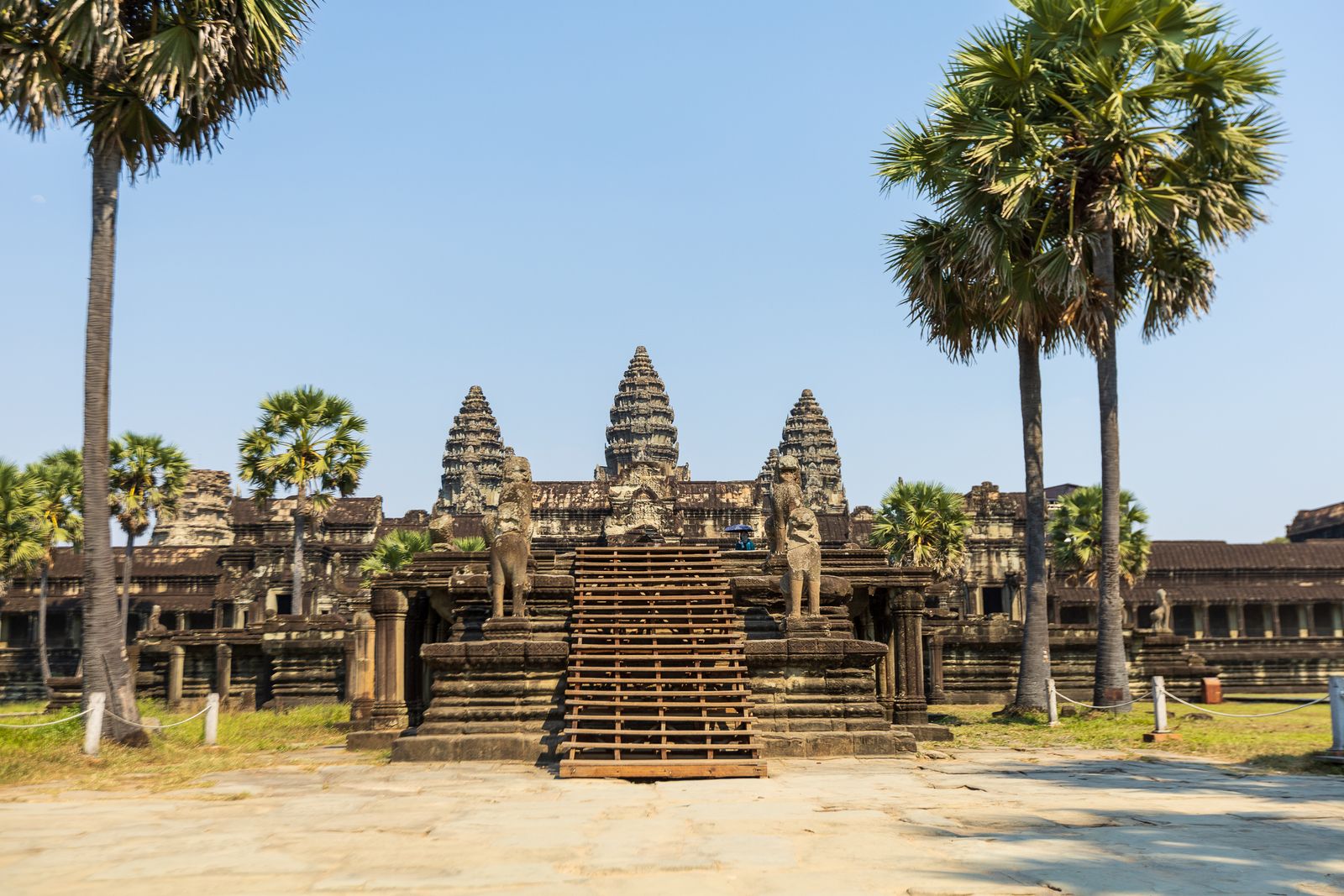
The Angkor Pass is the single biggest fixed cost of most Cambodia trips, and the ticket system has more fine print than you’d expect — validity windows, a sunset loophole, vending machines, and a handful of temples that aren’t covered at all. Here’s exactly how it works in 2026.
Angkor Ticket Prices in 2026
- 1-day pass: $37
- 3-day pass: $62 — valid on any 3 days within a 10-day window
- 7-day pass: $72 — valid on any 7 days within a 30-day window
- Children under 12: free (bring the passport as proof)
Prices haven’t moved since the big 2017 increase, and every dollar goes through Angkor Enterprise, the state body that manages ticketing. The pass is personal: your photo is taken (or uploaded) at purchase and printed on the ticket, so passes can’t be shared or resold.
The 3-day pass is the sweet spot for most travellers — $62 against $37 means the second day effectively costs $25, and almost nobody sees enough in one day. The non-consecutive windows are the underrated feature: temple-fatigue is real, and a rest day (or a Tonle Sap floating village trip) in the middle costs you nothing.
What the Angkor Pass Covers
One pass covers the entire Angkor Archaeological Park — Angkor Wat itself, the Bayon and everything inside Angkor Thom, Ta Prohm, and the dozens of temples along the small and grand circuits. It also includes the outlying sites most visitors assume cost extra: the exquisite carvings of Banteay Srei (35 km out), the river carvings at Kbal Spean, the early-period Roluos Group, and even the jungle-swallowed Beng Mealea, folded into the main pass a few years ago.
Checks are simple: tickets are scanned at the main road checkpoints and shown again at individual temple entrances, so keep it on you all day — being caught inside without one means buying a new ticket plus a fine.
How to Buy: Online, Ticket Office or Machine
Three legitimate ways, and only three:
- Online at angkorenterprise.gov.kh — the only official website. Buy the night before, save the photo/QR to your phone, and skip the counters entirely. Ignore the lookalike resale sites that pad the price.
- The official ticket office on Road 60, open 5:00am–5:30pm daily. Counters take USD cash, riel and all major cards. Queues peak between 4:30 and 5:00am with the sunrise crowd — another argument for buying online.
- Vending machines at the Angkor Wat west entrance and Heritage Walk mall, taking cards and QR payments.
Tuk-tuk drivers and hotels know the drill; if a “ticket agent” offers to sell you a pass anywhere else, walk away — it won’t scan.
Sunrise, the Sunset Trick and Timing Your Days
The best-kept official secret: buy your pass after 4:30pm and you can enter the park that same evening for free — the ticket only starts counting from the next day. Use it to watch sunset from Phnom Bakheng or the Angkor Wat moat as a bonus evening, then be at the reflection pools for sunrise the next morning with your full day intact. Our Angkor Wat sunrise guide covers exactly where to stand and when to arrive.
The park opens at 5:00am (Angkor Wat and Srah Srang for sunrise; most other temples from 7:30am) and closes around 5:30–6:00pm depending on the site. Cover shoulders and knees — enforcement is strict on the upper level of Angkor Wat — and see the packing guide for the full temple dress code.
Temples That Need a Separate Ticket
Three headline sites sit outside the Angkor Pass system:
- Phnom Kulen — the sacred waterfall mountain; separate ticket around $20, usually bundled into day tours.
- Koh Ker — the pyramid temple 2.5 hours northeast, UNESCO-listed in 2023; separate entry ticket (roughly $15).
- Kbal Spean note: covered by the Angkor Pass, but the community collects a small parking/access fee in cash.
If you’re doing the classic long day trip — Banteay Srei + Kbal Spean, or Beng Mealea + Koh Ker — check which legs your pass already covers before paying a tour operator for “tickets included.”
Budgeting the rest of the trip? The pass is the big-ticket item — the Cambodia budget guide shows where the other daily costs land, and the 7-day itinerary builds three temple days around it.
Related Articles



Sokunthea Keo
Cambodian food and culture expert based in Siem Reap.
Ready to Visit Cambodia?
Browse itineraries, destinations, and everything you need to plan your trip.